

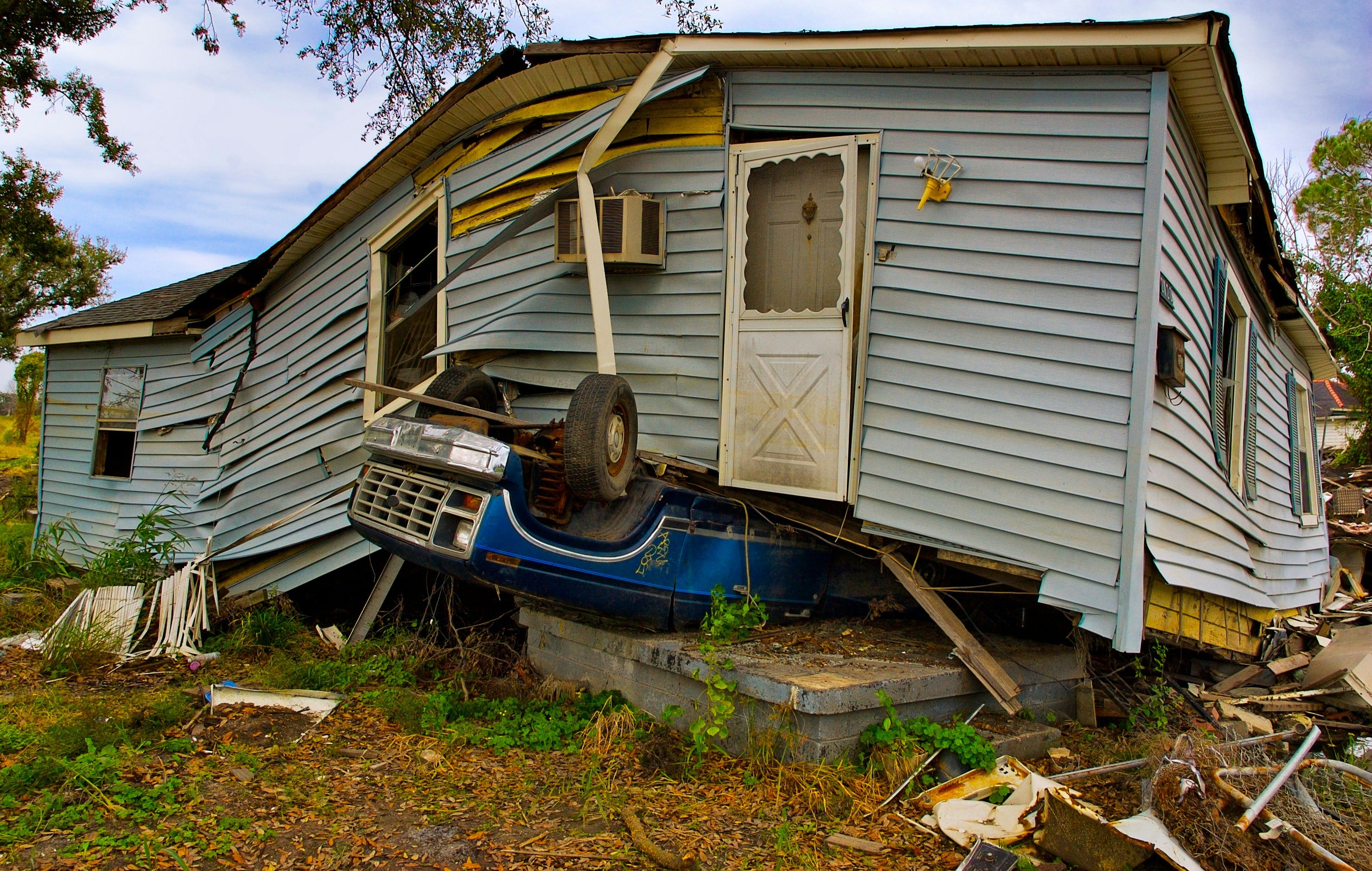
I live on Maui, and Hawaii endured a category one hurricane last week…barely. This article is about how victimhood prevents structural perception, the confusion of content and context, and how a repeated and predictable of pattern events somehow becomes a surprise for millions of people every year. But first:
Last week’s podcast, Dare to Open Up the Walls was a taste of what we’ll be doing in the upcoming course below. There is still some room left. We go over a fascinating celebrity chart that illustrates the mechanisms behind both genius and how it can go awry, showing how structure can express in multiple ways at the level of expression.
From Personality to Development begins Sep 3, 2026 for 12 consecutive weeks. Click the link for details and registration. Structural perception training, Developmental Astrology, compensation deconstruction, and more. Space is limited, potential is not.
Special thanks to Carmine Denisco for inviting me onto his podcast, The Launch Network, where we discussed structural perception, root problem solving, and much more. Here are the links to that episode on Apple and Spotify.
Disasters are often interpreted at the level of the event itself: the hurricane, the fire, the flood, the earthquake. How severe was it, how much damage occurred, who was harmed, what assistance is required. These are necessary questions, but they’re questions about content. Structural perception asks a different one: why did this event produce this particular outcome?
Events do not determine outcomes by themselves. Events encounter systems, and the characteristics of those systems determine what the events become.
The distinction is easy to see in something as ordinary as snow. Seven inches in Massachusetts is an inconvenience: roads get plowed, salt goes down, schools rarely close, and life resumes. The same seven inches in a place where snow is rare can shut a town down for days. The snow doesn’t change. The receiving structure does: equipment, personnel, road-treatment systems, building practices, and cultural competence built around recurring snow, versus none of that, when there’s rarely been a reason to build it.
This is the basic principle: an event’s significance cannot be understood apart from the system receiving it.
Natural disasters work the same way. A hurricane’s destructive consequences aren’t set by its category alone: wind speed and rainfall are only two variables among many. Electrical infrastructure, drainage, vegetation management, road design, communications, emergency staffing, building practices, supply chains, redundancy, terrain, and institutional coordination all shape what follows.
A modest storm can wreck a fragile system; a stronger one can be absorbed by a system built to take it. The useful question isn’t how severe the disturbance was. It’s how much disturbance the system could absorb before it broke down.
In this sense, disaster is a stress test. The event supplies pressure; the system reveals its capacity. Hawaii is a fragile system that predictably and regularly endures hurricanes. The most recent one (Lala) barely made landfall on the Big Island and only held category one status for about a day, yet tens of thousands lost power, 263 homes and 18 businesses were damaged by flooding, two people were killed, and many roads remained blocked by fallen trees for days afterward. Lala reached category 4 with sustained 130 mph wind after passing the islands in counterintuitively cooler water. This was a close call.
But Hawaii doesn’t need a hurricane to reveal this problem, much less a strong one. Hawaiian Electric’s own 2024 reliability filing shows that even with major storm days stripped out of the data, the average customer loses power for roughly three hours a year across nearly two separate interruptions, and vegetation alone (branches, trees, overgrown growth encroaching on lines) accounted for about 110,000 customer-hours of outages that year. Eight days in 2024 qualified as official “Major Event Days,” and most of them weren’t hurricanes. They were ordinary rain and wind in January, April, May, June, August, and October that the grid simply couldn’t handle.
Maui’s flooding tells the same story without a storm ever getting a name. South Kīhei has flooded on a near-annual basis for years, badly enough that in 2023 a young man was swept into an uncovered storm drain and killed during what was, for Maui, an unremarkable rain event. The county has known the fix for over a decade: three separate consultant studies and a 2022 drainage master plan pricing roughly $200 million in mitigation, including a $13.5 million first phase of detention basins. None of it has been built. None of it is on the county’s capital improvement list. The vulnerability isn’t hidden. It’s published, priced, and shelved.
A hurricane doesn’t invent any of this. It just makes many ordinary failures visible at once, instead of one gulch or one downed line at a time. A storm reveals power lines vulnerable to vegetation. A flood reveals insufficient drainage capacity. An earthquake reveals construction unable to tolerate lateral movement. A cyberattack reveals organizations without meaningful redundancy. A wildfire reveals weaknesses in land management, evacuation planning, communications, water systems, electrical infrastructure, emergency coordination, and institutional authority.
The disaster does not create these weaknesses. It makes them visible, but when people play victim to the disaster and can’t think systemically, it doesn’t appear that way.
This distinction becomes especially important in what happens afterward. Structural failures are frequently met with responses in the emotional and relational register: grief, prayer, mutual aid, fundraising, solidarity, memorialization, storytelling, symbolic declarations of collective strength. Human beings need emotional processing after loss, and communities do real work of care and belonging during a crisis, but these responses can implicitly be treated as though they address the structural failure itself.
Grief addresses grief. Prayer addresses meaning, hope, or spiritual orientation. Mutual aid addresses immediate material need. Community bonding addresses belonging and social cohesion. Fundraising transfers resources to the people and institutions that need them. None of it, by itself, hardens a grid, redesigns an evacuation route, digs a detention basin, removes hazardous vegetation, alters the incentives that reward deferred maintenance, or reveals which government employees are qualified to have their jobs.
The internet line that feeds my home, about a mile from where I sit, hangs five feet above the ground, weighed down by trees and brush in a state-owned forest, and I’ve spent about ten hours over the last two years trying to get someone to do something about it. Hawaiian Telcom, who owns the line, won’t mobilize unless it breaks (their explicit policy!), and the Public Utilities Commission ignored my complaint.
This is largely how infrastructure gets handled in Hawaii: if it ain’t broke, don’t fix it. And if it is broke, don’t look at why it broke in the first place — just perform the minimal fix. That posture is exactly what turned the Lahaina fire in 2023 from bad to catastrophic.
When a structural problem receives primarily an emotional or relational response, a category error has occurred. The response may be sincere, necessary, and even beautiful while still being directed at a different level of the problem.
This is one reason disasters can generate enormous collective activity without producing equivalent structural change. People gather, donate, mourn, volunteer, organize, and affirm community identity. The intensity of response creates a subjective impression that the problem itself is being addressed. Activity feels like efficacy. Solidarity feels like solution. Concern feels like prevention. None of these are substitutes for the structural work itself.
The same principle applies even to disaster relief. Generosity does not eliminate the need for structure. Large flows of emergency money require verification, allocation criteria, transparency, auditing, competent administration, enforcement, and accountability. Without these mechanisms, relief systems themselves become vulnerable to exploitation, waste, corruption, and unequal distribution.
Good intentions do not substitute for good structure. Even compassion requires architecture.
There is also a deeper reason structural prevention is chronically neglected: successful prevention is largely invisible.
If a government spends heavily to strengthen electrical infrastructure, improve drainage, clear hazardous vegetation, create redundant communications, and redesign emergency procedures, and a severe storm then passes without major disruption, very little appears to have happened. Power remains on, roads remain open, emergency services function, and people return to ordinary life.
There is no dramatic image of the disaster that did not occur.
The cost of prevention, however, is immediately visible. Infrastructure requires money, personnel, political attention, and ongoing maintenance. Those resources compete with other urgent demands. The benefit is often deferred and counterfactual: it consists in something not happening at some unknown point in the future.
This creates a predictable bias toward underinvestment. Maintenance is postponed because nothing has failed yet. Redundancy appears inefficient because primary systems still function. Fragility remains invisible under ordinary conditions. Then an abnormal condition arrives and reveals what was already true, but mostly people play victim to the event and don’t ask why it hit as hard as it did.
None of this means every system should prepare for every conceivable disturbance — that’s its own kind of naivety. A town that gets real snow once a decade doesn’t need Boston’s snow-removal budget. The question is which disturbances are probable and consequential enough to design for, and how much failure is acceptable when they land.
Resilience therefore depends on intelligently chosen margin.
This matters especially in systems where failures cascade. Islands provide an obvious example. Limited roads, constrained ports, remote communities, long electrical distribution networks, difficult terrain, dependence on imported goods, and limited redundancy can turn localized failures into system-wide disruption. A system may function perfectly well under normal conditions while remaining highly vulnerable to simultaneous deviations across several variables.
For this reason, resilience cannot be measured merely by how effectively a system operates when nothing unusual is happening. The more revealing question is what occurs when ordinary assumptions stop being true.
The same principle extends far beyond infrastructure.
Human beings function as structures too. Criticism doesn’t produce the same outcome in every person, and neither does rejection, success, illness, betrayal, loss, or failure. The content is similar; the developmental process is radically different. One person meets criticism with curiosity. Another collapses, attacks, or dissociates. Another adjusts behavior while the underlying structure stays the same. Another lets it reorganize something fundamental. The criticism alone doesn’t explain the difference. The receiving structure does. But what do most people do? They play victim to the circumstance and seek to better control their environment or inner state rather than augment their capacity.
Content-level explanations miss this constantly. We say someone became depressed because a relationship ended, a company failed because the market changed, a community flooded because a hurricane arrived. True in content. Thin in context.
Structural perception asks what had to already be true for this event to produce this outcome. That question moves beneath narrative into architecture.
A disaster is therefore not only an event. It is information. It reveals where capacity was exceeded, where assumptions were wrong, where dependencies were hidden, where redundancy was absent, where authority was confused, and where responsibility was distributed so diffusely that effective action became difficult.
The emotional response tells us what the event meant to people. The structural response determines whether the same kind of failure is likely to happen again. Both matter, but neither substitutes for the other.
When structural failure is answered primarily with emotion, solidarity, symbolism, or narrative, the problem is not that those responses are inappropriate. The problem is that they belong to a different category. They address suffering, belonging, meaning, and immediate human need while leaving the architecture that produced the vulnerability substantially intact.
Then the next event arrives, and the resulting failure is treated as surprising. A more mature response to disaster therefore asks two questions at once: how do we care for the people affected, and what did this event reveal about the structure that received it?
The first question addresses the human consequences of what happened. The second determines whether anything fundamental will be different when (not if) it happens again.
P.S. As I write this on 8/21/26, another tropical storm is expected to pass Hawaii tomorrow night, close enough to bring a lot of rain to still saturated ground.